How did a fake fish slip turn an airport cargo bay into a $20M gold heist?
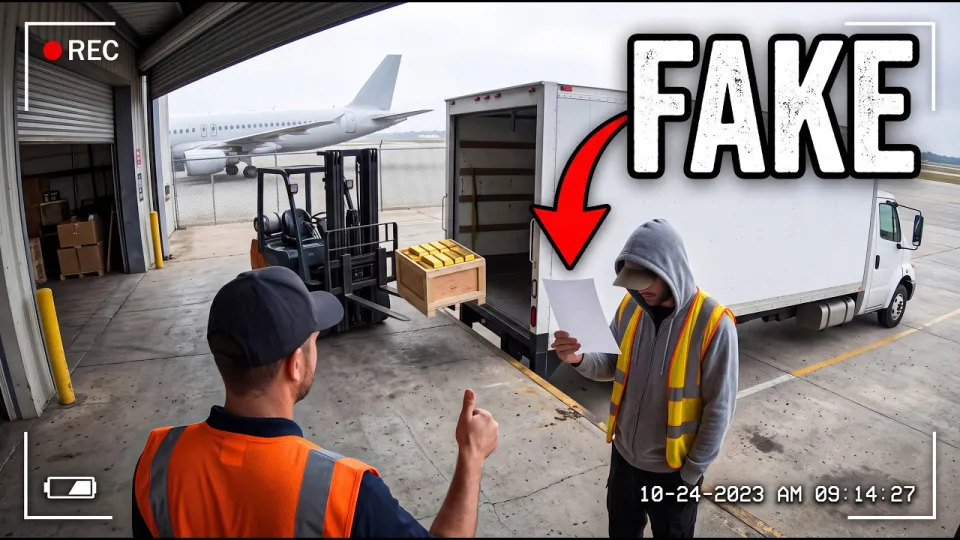
Video: Airport Has No Idea It Just Handed $20M in Gold to Thieves (crime story)
· based on the channel Max Crime
Key takeaways
- An Air Canada flight landed at Toronto Pearson with 6,600 gold bars packed into a single metal container.
- A man drove a white truck to the airline's cargo warehouse and handed over a fraudulent document for a fish shipment.
- The paperwork referenced fish that had already been collected the day before, yet staff released the gold.
- The stolen shipment was valued at roughly $20 million, moved with no forced entry and no visible weapon.
- The case became a benchmark example of cargo theft built on procedural gaps rather than brute force.
A crime story about Toronto Pearson International Airport shows how far a single convincing piece of paper can go: thieves took roughly $20 million in gold out of an Air Canada cargo warehouse by presenting a fake pickup slip for a shipment of fish. No alarms were tripped, no vault was breached and no weapon appears in the account of how the container left the building. The entire operation rested on knowing the paperwork, the timing and the habits of a cargo terminal.
What actually happened at the Air Canada cargo terminal
An Air Canada flight arrived at Toronto Pearson carrying 6,600 bars of gold inside one metal container, and by that evening the container was gone. According to the account of the case, a man backed a white truck up to the airline's cargo warehouse and handed staff a document claiming he had come to collect a shipment of fish. The slip was fraudulent, and the fish it described had already been picked up the day before — a detail that should have stopped the transaction on its own.
Instead, the load was released. The gold was loaded onto the truck and driven away, and the airport had effectively handed a nine-figure-value shipment to people who had never booked a flight, never chartered a plane and never touched the cargo area's secure vault. This is the core of the crime story: the theft did not defeat security, it walked past it on the strength of a routine request.
The procedural gaps that made the gold heist possible
The heist worked because several small checks that normally overlap never lined up at the same moment. Each gap on its own looks minor; stacked together they form the opening.
- Document verification. A paper or printed slip was treated as sufficient proof of entitlement to collect cargo, without a call-back to the shipper or consignee to confirm the pickup.
- Shipment matching. The document referred to a fish consignment that had already been collected the previous day, meaning the warehouse's own records contradicted the request.
- Identity and courier checks. A driver with a truck and paperwork was accepted as a legitimate courier, with limited scrutiny of who he actually worked for.
- Physical release. Cargo left the facility on the authority of the document rather than on a second, independent confirmation at the loading dock.
- Timing. The pickup came after the arrival flight had been processed, when staff attention is spread across incoming and outgoing freight.
Cargo theft specialists describe this pattern repeatedly: the weakest point in a freight terminal is rarely the fence or the camera, it is the moment a human being decides that a piece of paper looks right.
Why a fish shipment was the perfect cover
Fish is a mundane, high-frequency air cargo category, and that is exactly what made it useful as a disguise. Perishable seafood moves through airport warehouses constantly, often on tight schedules, and staff are used to couriers arriving with slips for chilled or frozen product. A request for fish raises no eyebrows and invites speed rather than suspicion.
The fraud also exploited a quirk of the record-keeping. Because the fish shipment had genuinely existed and had already been collected, the reference numbers and consignment details on the fake document were not invented from nothing — they pointed at real cargo that had passed through the same system. A clerk checking the paperwork against a database could find a matching entry, even though the physical goods were long gone.
That is the difference between a smash-and-grab and this kind of crime story. The thieves did not need to break the warehouse; they needed the warehouse to believe the warehouse's own paperwork.
How the $20 million figure is built from 6,600 gold bars
The scale of the loss comes down to weight and purity as much as to the count of bars. Gold is one of the densest forms of value that can be moved by hand truck and van, so a single metal container can hold a fortune that would take a much larger convoy to match in cash.
- 6,600 bars in one container means the shipment was consolidated freight, not a retail delivery.
- The reported value of roughly $20 million places the average bar in the low thousands of dollars, consistent with standard small investment bars rather than large central-bank ingots.
- The whole load fit on one truck — no crane, no convoy, no unusual logistics that might have drawn attention at the gate.
For anyone planning a robbery, that ratio is the appeal: the highest value per kilogram in commercial air freight, packaged in a form that looks like any other palletised cargo.
Who investigates a cargo theft like this
A theft of this size pulls in more than airport police. The investigation typically runs across several tracks at once, because the crime scene is a logistics chain rather than a single room.
- Airport and regional police handle the initial report, the warehouse scene and the review of access records.
- The airline and its cargo insurer conduct their own internal review of how the shipment was released and who signed it out.
- Border and customs agencies watch exit routes, since gold that leaves the country is far harder to recover than gold that stays inside it.
- Freight forwarders and shippers trace the chain of custody from the refinery or vault to the aircraft and onward to the consignee.
The recurring obstacle is evidence. Cargo terminals run on a mix of digital records and paper, and a fraudulent slip that has been handed over and filed can be hard to tie to a specific person, especially when the truck, the plates and the driver's identity are all part of the deception.
What the case changed about air cargo security
The lasting lesson of this crime story is that gold does not need a vault, it needs a verified handover. Air cargo operators have since faced louder calls for the same measures that banks take for granted: two-person verification for high-value consignments, mandatory call-backs to the known shipper before release, photo identification logged against the pickup, and physical checks at the dock rather than at the desk.
There is also a quieter point about incentives. A warehouse that handles thousands of consignments a week is measured on speed and throughput, and every extra check costs minutes. Thieves understand that trade-off better than most auditors do, which is why the fraudulent-document approach keeps reappearing in cargo theft cases around the world — the method is cheap, repeatable and leaves the facility looking careless rather than breached.
The bottom line on this gold heist
This is a crime story about bureaucracy being used as a weapon: 6,600 bars of gold left Toronto Pearson because a fake slip for fish was accepted as proof of ownership. The thieves needed no violence and no insider demolition of the building, only a plausible document, a white truck and a terminal willing to trust the paperwork. The case sits alongside the most instructive cargo thefts precisely because it shows how ordinary procedures, left unverified, become the weakest link in a supply chain. The full breakdown, including the sequence of the pickup and the gaps in the release process, is presented by the Max Crime channel, which specialises in reconstructing investigations like this one.
Source: Airport Has No Idea It Just Handed $20M in Gold to Thieves (crime story) · Markdown version
Questions & answers
How much gold was stolen at Toronto Pearson airport?
The shipment contained 6,600 gold bars packed into a single metal container, and the loss was valued at roughly $20 million. It arrived on an Air Canada flight before being collected from the airline's cargo warehouse.
How did thieves get the gold out without force?
A man drove a white truck to the cargo warehouse and presented a fraudulent pickup document for a shipment of fish. Staff released the container on the strength of that paperwork, so the load left the facility through the normal loading process.
Why was a fish shipment used as the cover story?
Fish is routine, high-frequency perishable air cargo, so a courier arriving for it attracts little attention. The fake document also referenced a consignment that had genuinely passed through the system the day before, making the details look legitimate in the records.
What security failures did the heist expose?
The release relied on a single document with no independent confirmation, even though the referenced fish shipment had already been collected. It highlighted the need for call-backs to shippers, logged photo identification and two-person verification for high-value cargo.